7 Mistakes Parents Make When Choosing Online Spanish Classes for Kids (and How to Fix Them)
10 de septiembre de 2026
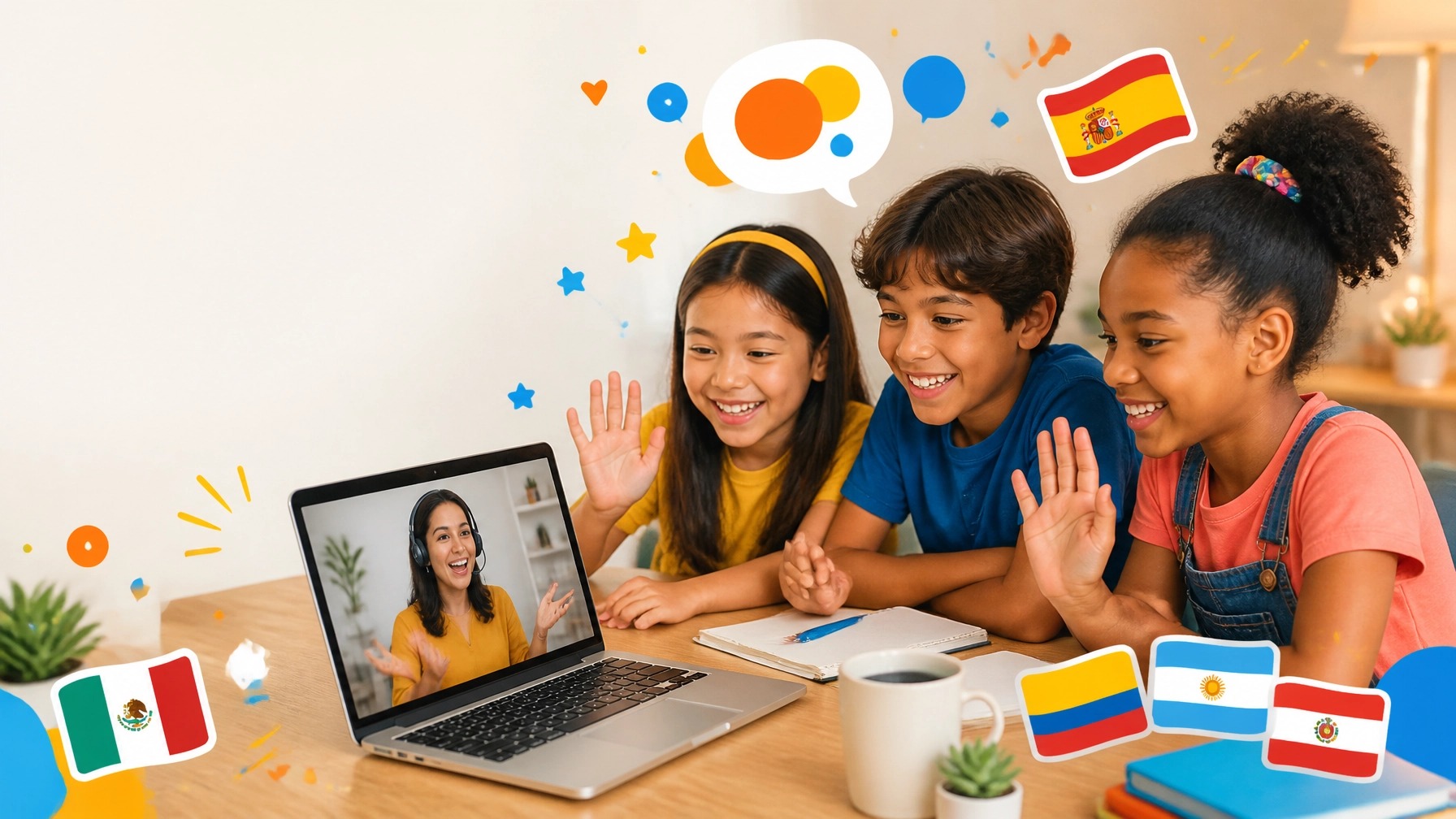
Choosing online Spanish classes for kids can feel overwhelming. There are apps, videos, tutors, group programs, private lessons, and promises of “fluency fast” everywhere you look!
You want your child to enjoy learning. You also want real results. Most importantly, you do not want to waste your time, money, or your child’s enthusiasm. 💛
The good news? Finding the right Spanish program becomes much easier when you know which red flags to avoid.
Here are seven common mistakes parents make when choosing Spanish tutoring for kids, and exactly how to fix them. ¡Vamos!
1. Choosing a Class Based Only on Price
Price matters. Of course it does! Every family has a budget.
But the cheapest option is not always the best value. A low-cost class may have very large groups, little speaking time, no clear curriculum, or an instructor without experience teaching children. If your child finishes months of lessons unable, or unwilling, to speak Spanish, the “cheap” option can become very expensive.
Instead of asking only, “How much does this class cost?” ask:
-
How much individual speaking time will my child receive?
-
Is the teacher trained to work with children?
-
Are lessons live and interactive?
-
Is the class appropriate for my child’s age and level?
-
How many students are in the group?
-
What happens if my child is shy, distracted, or needs extra support?
A great Spanish class should deliver more than screen time. It should build confidence, curiosity, and a genuine love for the language. 😊
The better approach
Think in terms of value, not just price. A well-designed class with an expert teacher, small-group interaction, and a clear learning path can save you from switching programs repeatedly.
Look for a program that makes your child say, “¡Otra vez!”, “Again!”, because they are having so much fun.
2. Ignoring Native-Speaker Credentials
A teacher does not need to be from one specific country to be excellent. Spanish is spoken across Spain, Latin America, and many communities around the world.
However, for strong pronunciation, natural expressions, listening skills, and cultural understanding, children benefit from regular exposure to a fluent or native Spanish speaker.
You should also look beyond the word “native.” Native fluency is important, but teaching children is a specialized skill. A fantastic adult conversation tutor may not know how to keep a preschooler engaged or help a hesitant tween participate.
What to look for in a teacher
-
Native or highly fluent Spanish-speaking instructors
-
Experience teaching children and teens
-
A warm, patient teaching style
-
Training or credentials in education
-
Age-appropriate classroom management
-
Background checks and child-safety standards
-
The ability to explain or support learning when a child needs help
At Spanish the Fun Way Academy, our published standards include native certified teachers, background-checked educators, a safe and inclusive learning environment, and support for neurodivergent learners.
That combination matters. Your child should feel safe enough to make mistakes, and excited enough to keep trying. ¡Muy bien!

3. Choosing an App or Video Course With No Live Interaction
Apps can be useful. Songs, videos, and games can add extra practice. But they should not replace real conversation.
A child can memorize colors, animals, or vocabulary words without knowing how to answer a simple question. Speaking requires speaking! Children need opportunities to listen, respond, ask questions, laugh, make mistakes, and try again with a real person.
This is where live online Spanish classes for kids make a difference.
A live teacher can:
-
Adjust the lesson when your child is confused
-
Encourage a quiet learner to participate
-
Correct pronunciation gently
-
Ask follow-up questions
-
Turn a child’s interests into conversation
-
Celebrate small wins immediately
Recorded content cannot notice that your child is ready for a bigger challenge, or needs a slower pace today.
The better approach
Choose live lessons where conversation is part of the class, not an occasional bonus. Games, songs, stories, and interactive activities are fantastic when they lead children toward real communication.
For example, a food vocabulary game can become a conversation about favorite meals. A story can become a chance to describe characters. A song can help children practice rhythm, pronunciation, and memory.
That is how Spanish starts moving from a worksheet into your child’s real life. 🎵
4. Picking the Wrong Frequency
One class per week may be a comfortable starting point. But for many children, especially beginners, long gaps between lessons make it harder to remember vocabulary and maintain momentum.
On the other hand, a demanding daily schedule may not be the right fit for every family. The best frequency depends on your child’s age, goals, attention span, school schedule, and current level.
A simple way to think about frequency
-
1x per week: A gentle introduction or enrichment option
-
2x per week: A strong rhythm for steady progress
-
3–5x per week: Helpful for families seeking faster growth or immersion
-
7x per week: An intensive option for a focused short-term goal
Consistency is the key. Short, regular exposure usually beats one occasional marathon session.
Ask yourself: Can our family realistically maintain this schedule for several months? If the answer is yes, you have found a much better match.
Spanish the Fun Way offers flexible options, including full courses that meet once, twice, five times, or even seven times per week. There are also camps, conversation clubs, and one-time cultural classes for families who want to start with something fun and low-pressure.
Explore live Spanish classes and tutoring options on Outschool.
5. Not Checking the Group Size
“Group class” can mean six children, or thirty-six! Those experiences are very different.
In a large online class, your child may spend most of the lesson watching other students answer. They may have fewer speaking turns. They may also find it easier to disappear when they feel nervous.
Small groups create more space for participation. They help teachers learn each child’s personality, strengths, and needs. They also give children the social energy of learning with friends without turning the class into a noisy free-for-all.
Before enrolling, ask:
-
What is the maximum number of students?
-
How often does each child speak?
-
Does the teacher use turn-taking activities?
-
Are quieter children encouraged without being pressured?
-
Is there a private tutoring option if my child needs individual attention?
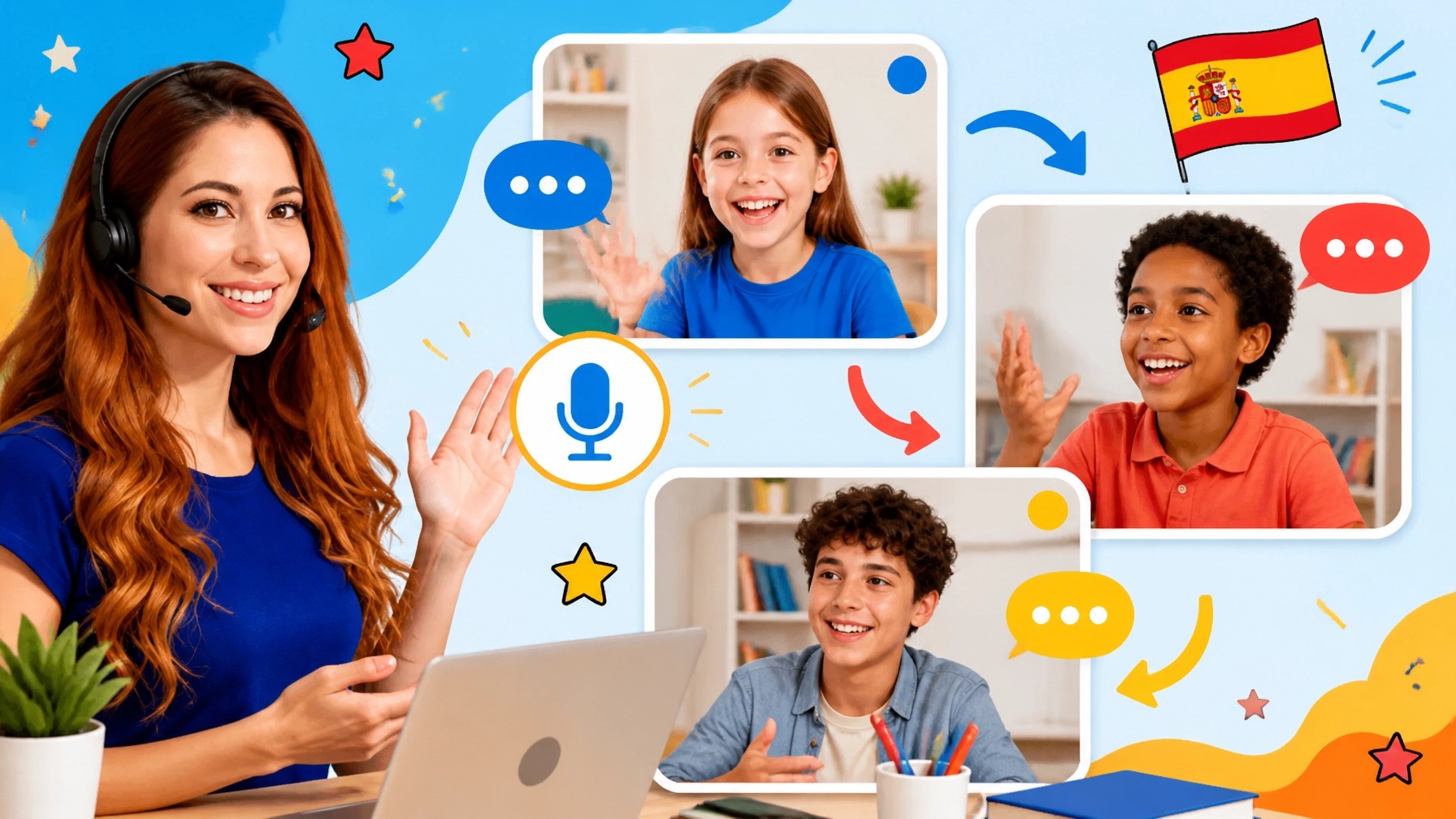
Spanish the Fun Way’s online programs include small live groups, with a published maximum of six children per class, as well as personalized 1-on-1 tutoring.
6. Enrolling Without Checking for Progress Signals
You should not have to guess whether your child is learning.
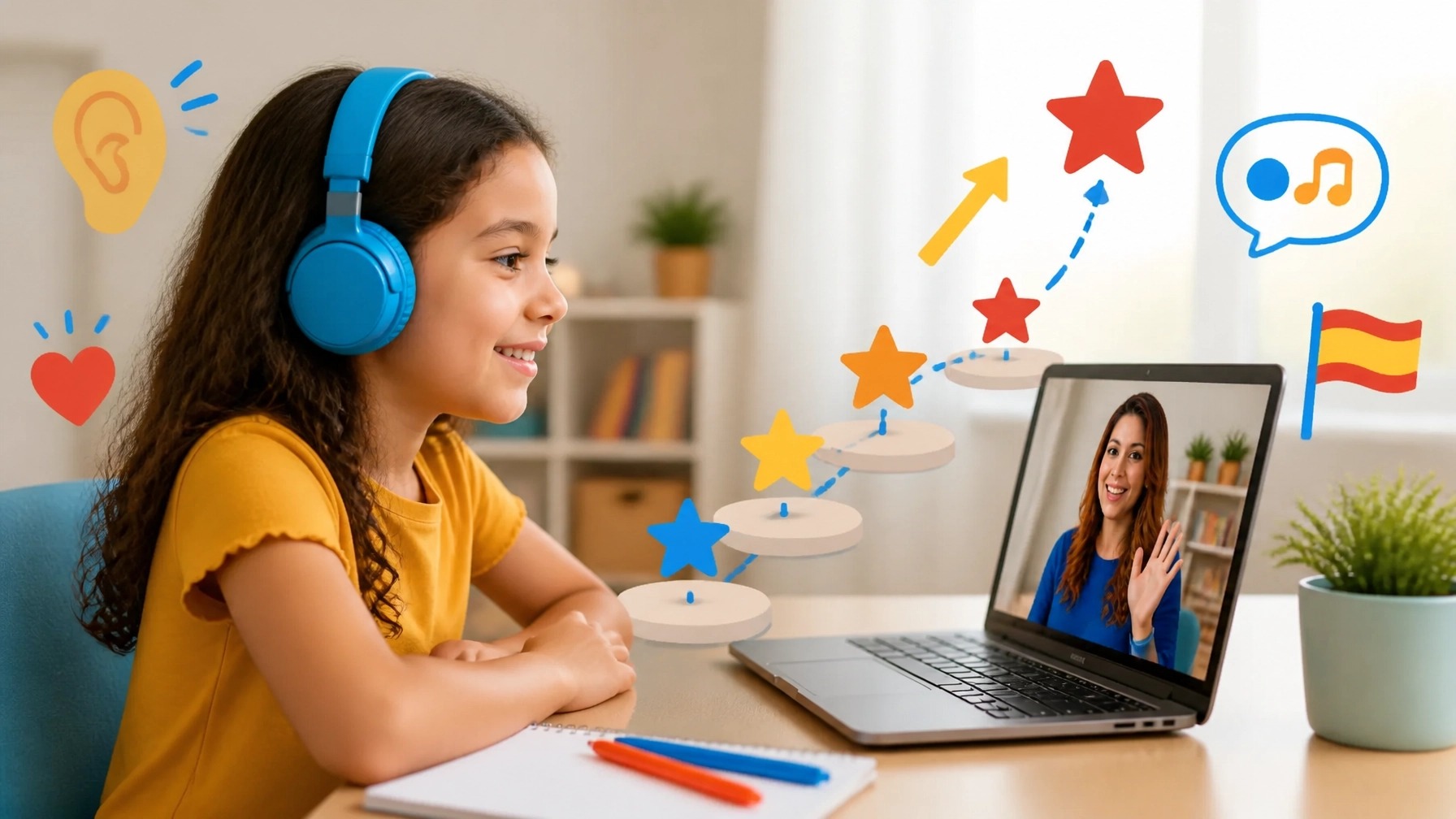
Progress does not always look like a perfect test score. It may look like your child greeting the teacher independently, understanding a familiar question, singing along to a song, naming objects around the house, or answering with one extra word.
Still, a quality program should give you a clear idea of what your child is working toward.
Look for progress signals such as:
-
A placement or level check before enrollment
-
Age- and level-specific learning goals
-
Regular opportunities to speak
-
Increasing comprehension
-
New vocabulary used in context
-
More confidence and less hesitation
-
Teacher feedback or lesson summaries
-
A curriculum that develops over time
Be careful with programs that promise instant fluency. Language learning is a journey, not a magic trick! The right teacher will help you understand what is realistic for your child and how progress will be recognized.
A free placement class can be especially helpful. Spanish the Fun Way offers a free placement and meet-and-greet class, so your child can be matched with an appropriate level and teacher fit.
7. Worrying When Your Child Enters the “Silent Period”
This is one of the biggest mistakes, and one of the most understandable. Your child attends Spanish class for a few weeks, but they are not speaking much at home. You wonder, “Is this working?”
Possibly, yes!
Many children experience a normal early-learning stage often called the silent period. They may listen carefully, observe others, understand more than they can say, and quietly collect language before using it aloud.
This does not mean nothing is happening. Your child may be building pronunciation patterns, recognizing familiar phrases, and developing confidence.
How to support your child
-
Celebrate listening and participation, not only full sentences
-
Avoid putting your child on the spot at home
-
Repeat simple phrases naturally
-
Use songs, stories, and games
-
Give your child time to answer
-
Ask the teacher how they support shy learners
-
Stay consistent before deciding the program is not working
You can say, “¿Quieres agua?”, “Do you want water?”, and accept a smile, gesture, “sí,” or “no” as a meaningful response.
Little by little, those tiny moments become spontaneous Spanish. One day, your child may surprise you with a whole sentence at breakfast. ¡Qué emoción! 🇪🇸
Your Quick Checklist for Choosing Spanish Tutoring for Kids
Before you enroll, make sure the program offers:
-
✅ Native or highly fluent Spanish-speaking teachers
-
✅ Experience teaching children your child’s age
-
✅ Live interaction and real speaking practice
-
✅ Small groups or personalized tutoring
-
✅ A suitable level and age format
-
✅ Flexible frequency options
-
✅ Clear learning goals and progress signals
-
✅ Patience with the normal silent period
-
✅ A safe, inclusive, welcoming environment
-
✅ Fun lessons built around games, songs, stories, and culture
At Spanish the Fun Way Academy, children ages 3–18 learn through live, native-led lessons designed to keep them engaged and speaking with confidence.
You can explore the academy’s Spanish programs, browse available classes on Outschool, or begin with a placement class to find the right fit.
Ready to give your child a joyful start? Use promo code SPANISH20 when you enroll for the available introductory offer. Spots in popular small-group classes can fill fast, so don’t wait too long!
Your child does not need to be perfect. They just need a welcoming place to begin.
¡Hola, amigos! Let’s make Spanish the favorite part of their week! 💃🌟
Frequently Asked Questions
What should I look for in online Spanish classes for kids?
Look for live instruction, native or highly fluent teachers, age-appropriate lessons, small groups, real speaking practice, and clear learning goals. A fun, supportive environment is essential, too.
Are live Spanish classes better than language apps for children?
Apps can be useful for extra practice, but live classes give children something apps cannot fully provide: real-time conversation, personal encouragement, feedback, and social interaction with a teacher and classmates.
How often should my child take Spanish classes?
Many children benefit from meeting two times per week for steady progress. Once-weekly classes can work well for enrichment, while three or more weekly lessons may suit families seeking a more intensive experience.
How many students should be in an online Spanish class?
Smaller groups generally provide more speaking opportunities and personalized attention. Ask about the maximum class size and how the teacher makes sure every child participates.
How long does it take for a child to speak Spanish?
Every child is different. Some children begin using simple phrases quickly, while others spend more time listening before speaking. This silent period can be a normal part of language learning. Consistent exposure and a supportive teacher help build confidence.
Is Spanish tutoring for kids suitable for complete beginners?
Absolutely! Beginner classes should use games, songs, gestures, stories, and repetition to make Spanish understandable and enjoyable from the first lesson.
How can I find the right Spanish level for my child?
Choose a provider that offers a placement check or meet-and-greet. A teacher can consider your child’s age, previous exposure, comprehension, speaking ability, and confidence before recommending a class.