At-Home Spanish Practice: We Will Write, We Will Speak
13 de octubre de 2026
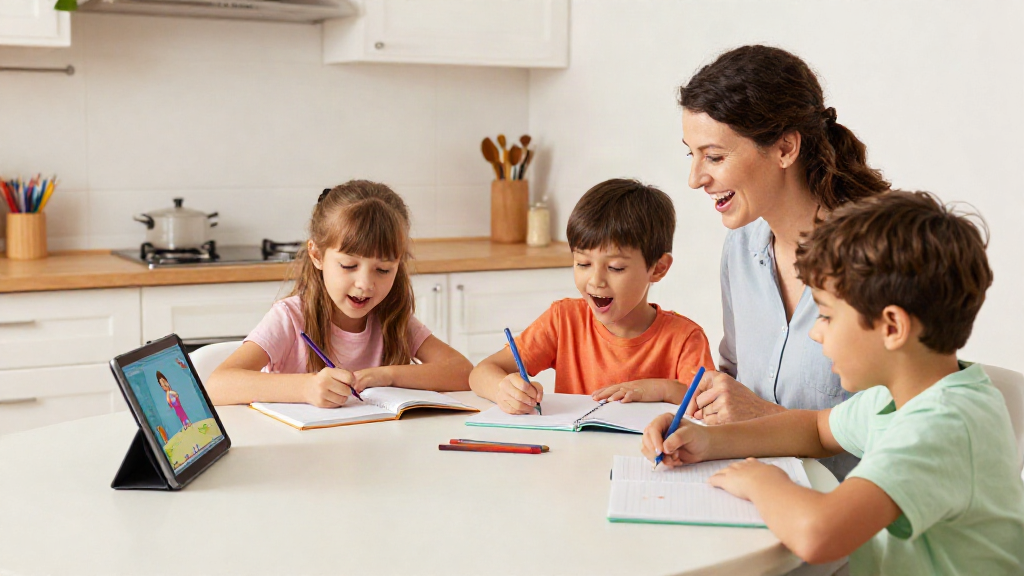
Your child just finished a live Spanish class. They were laughing, answering in full sentences, maybe even singing. Then the week happens - homework, dinner, bedtime - and by next class the words feel a little farther away. You want the learning to stick, but you don't speak Spanish yourself, so where do you even start?
Here's the good news: you don't need to be fluent to be the reason your child keeps going. What you need is a tiny, repeatable routine that fits in ten minutes a day. We call it "we will write, we will speak" - and it is designed for exactly the parent who is cheering from the sidelines.
Why Home Practice Is the Secret Ingredient
Live classes give your child expert teaching, native pronunciation, and real conversation. Home practice does something different: it turns Spanish from a "class subject" into a normal part of everyday life. That shift is what builds confidence.
Children who practice a little between lessons:
- Remember vocabulary far longer than kids who only hear it once a week
- Feel braver about speaking up in class, because the words are already familiar
- Start using Spanish on their own - at the dinner table, in the car, with cousins
And the practice doesn't have to be fancy. Ten focused minutes beats a "perfect" hour you keep postponing.
The 10-Minute-a-Day Routine
Think of each day as three small blocks: write, sing, speak. You can do all three in one sitting or spread them across the day.
We Will Write: 3 minutes
Writing slows things down, and slow is where memory forms. Keep it low-pressure and let the notebook be a happy, messy place.
Try these prompts, choosing the one that matches your child's level:
- Beginners: "Write three things in the kitchen you can name in Spanish - la mesa, la silla, la ventana." Let them draw the word if spelling is hard.
- Getting going: "Write one sentence about your day: Hoy comí..." (Today I ate...) - pizza, pasta, plátano, whatever's true.
- Confident writers: "Write two sentences about your favorite animal - what it looks like, what it eats, and what it says in Spanish."
The magic phrase here is simple, and you can say it in English every time: we will write, we will speak. Writing is the warm-up; speaking is the victory lap.
We Will Sing: 3 minutes
Songs are how children memorize without noticing. You don't have to sing well - your child just needs to hear rhythm and repetition.
- Ask your teacher for a class song your child already knows, and replay it in the car.
- Swap in Spanish for a song you already sing: "Feliz cumpleaños," or a countdown for cleanup time - "¡Cinco, cuatro, tres, dos, uno, ya!"
- Make up silly verses. "Soy un gato, soy un gato, me gusta el pescado" (I'm a cat, I like fish) is a hit with almost every five-year-old.
Humming along with no words at all still counts. You're building the habit, not performing a concert.
We Will Speak: 4 minutes
This is the part parents worry about most - and it's the easiest to fake. You can run speaking games with zero Spanish of your own, because your child is the expert and you're the audience.
- The "Show Me" game: You say a category in English - "show me something red," "show me where you eat" - and your child answers in Spanish. You get to point and cheer.
- Puppet or stuffed-animal talks: Have a toy "only speak Spanish." Kids relax and correct the puppet without feeling corrected themselves.
- Two Truths and a Spanish Lie: Mix Spanish and English and let your child catch your mistakes. They'll laugh and teach you something new.
- Question of the day: "¿Cuál es tu color favorito?" (What's your favorite color?) Ask the same question every day for a week and watch the answer grow into a sentence.
Making It Survive a Busy Week
The routine only works if it's realistic, so keep it small and attach it to things you already do:
- After school snack: write.
- Car ride: sing.
- Bath or bedtime: speak.
- Missed a day? Just start again. Inconsistency is normal; giving up is the only real risk.
Set a timer for ten minutes. When it buzzes, stop - even if it's fun. Ending while everyone still wants more keeps the habit alive.
"But I Don't Speak Spanish - Can I Really Do This?"
Yes. You are not the teacher. You are the coach, the audience, and the person who says, "¡Muy bien!" a hundred times. Your child's native-speaking teacher handles accuracy, grammar, and pronunciation in the live classes. Your job at home is enthusiasm and repetition - and that's the part that turns lessons into real ability.
And if your child is older or seems "behind," it is never too late. Kids absorb language quickly when it's joyful and consistent, at any age from 3 to 18.
Turning Practice Into Progress
A ten-minute routine doesn't replace great teaching - it makes great teaching stick. That's why families pair this at-home habit with live online Spanish classes led by native, background-checked teachers who make every session playful, safe, and genuinely fun. Between the games at home and the conversations in class, Spanish stops being homework and becomes something your child is proud of.
So this week, try just one round: we will write, we will speak - ten minutes, no pressure, lots of "¡Wepa!" You might be surprised how quickly your child starts speaking. Nos vemos en clase.
Quick-Start Checklist
- Pick one notebook as the "Spanish journal."
- Choose a daily 10-minute slot you'll actually keep.
- Learn one song from class to replay in the car.
- Ask one question of the day - and answer it yourself in English.
- Celebrate every attempt, even the messy ones.