My Child Won't Speak Spanish: 7 Ways to Break the Silent Period (Backed by Science)
23 de julio de 2026
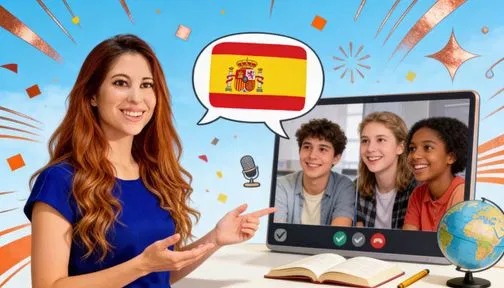
"I've been reading Spanish books, playing Spanish songs, and we even started online Spanish classes for kids... but my child won't say a single word!"
Does this sound like you? ¡No te preocupes! (Don't worry!) You are not alone.
As a parent, it's completely natural to feel a little anxious when your child understands everything you say in Spanish but refuses to speak it back. You might be thinking, "Is it working? Am I doing enough?"
The short answer? Yes! Your child is likely in what linguists call the Silent Period. It is a scientifically proven, totally normal phase of language acquisition. It's not a wall; it's a bridge!
In this guide, we're going to dive into the science of why kids stay quiet and give you 7 proven ways to help them find their voice, all while keeping it fun and stress-free. Let's get those amigos talking!
What is the "Silent Period" Anyway? (The Science Bit)
Research shows that when children learn a second language, they almost always go through a phase where they focus entirely on listening and understanding before they feel ready to speak.
This period typically lasts anywhere from 1 to 6 months, but every child is different! During this time, their brains are like giant sponges 🧽, soaking up grammar, vocabulary, and rhythm. Even if they aren't speaking yet, their "mental dictionary" is growing every single day.
Forcing a child to speak before they are ready can actually raise their "affective filter" (language-learning speak for "stress level"), which makes learning harder. Our goal is to lower that stress and make Spanish the most exciting part of their day!
1. Focus on "Comprehensible Input" (The Magic Ingredient)
Science tells us that we don't learn a language by being forced to speak it; we learn it by understanding what we hear. This is called Comprehensible Input.
Instead of asking "How do you say 'apple' in Spanish?", try describing the apple while they hold it. "¡Mira! Una manzana roja. Es dulce y deliciosa." (Look! A red apple. It's sweet and delicious.)
When you provide rich, understandable Spanish through stories, gestures, and real-life objects, you are building the foundation for speech. At Spanish the Fun Way Academy, our native teachers use "Total Physical Response" (gestures and movement) to ensure your child understands 100% of the lesson without needing a single word of English.
2. Lower the Pressure (Say Goodbye to "Dilo en Español")
The phrase "Say it in Spanish" can be a major mood-killer for a child in the silent period. 🛑
When a child feels "put on the spot," their brain switches from "learning mode" to "survival mode." To break the silence, we have to remove the demand.
The Trick: Respond to their English with Spanish.
- Child: "I want the blue car."
- You: "¡Ah, el coche azul! Aquí tienes el coche azul."
By validating their communication and modeling the Spanish version, you are showing them that Spanish is a tool for connection, not a test they have to pass.
3. Use "Choice Questions" and Non-Verbal Cues
If your child isn't ready for full sentences, give them a low-stakes way to participate. Choice questions are a parent's best friend! 👩🏫
Instead of "What do you want to drink?", try:
- "¿Quieres leche o quieres agua?" (Do you want milk or water?)
Hold up the milk in one hand and the water in the other. Your child can answer by pointing, nodding, or repeating just one word: "Agua." 🎉
4. Introduce "Power Words" for Daily Success
Focus on these 5 Power Words:
- Más (More)
- Mira (Look)
- No (No)
- Sí (Yes)
- Yo (Me/I)
When they use these words, celebrate! When they see that a tiny Spanish word has "magic power" to get results, they'll try another one.
5. Lean into Music and Choral Repetition
Music bypasses the "speech center" of the brain and lives in the "rhythm center." Try "call and response" games:
- You: "Los pollitos dicen..."
- Them: "...pío, pío, pío!" 🐥
Choral repetition (speaking together) makes them feel safe.
6. Gamify the Experience (The "Minecraft" Strategy)
Kids speak when they are engaged. When a child needs to say "¡Corre!" (Run!) to save their character from a Creeper, they aren't thinking about grammar; they are thinking about surviving the game! 🎮
By integrating Spanish into their existing hobbies, you turn the language into a fun companion rather than a chore.
7. Connect with Native Teachers and Peers
Sometimes, a child won't speak Spanish to Mom or Dad because they know you speak English. But when they enter a virtual classroom with a native Spanish speaker and other kids, something magical happens. The social drive to "belong" is often the spark that breaks the silent period.
Ready to Hear Those First Words? ¡Vamos!
The Silent Period isn't forever. With the right support, your child will move from listening to "mouthing" words, then to single words, and finally to full, beautiful sentences.
Use code SPANISH20 at checkout for $20 off your first class with us on Outschool.
¡Nos vemos en clase!