Spanish Apps vs. Live Classes: What Gets Kids Talking?
5 de noviembre de 2026
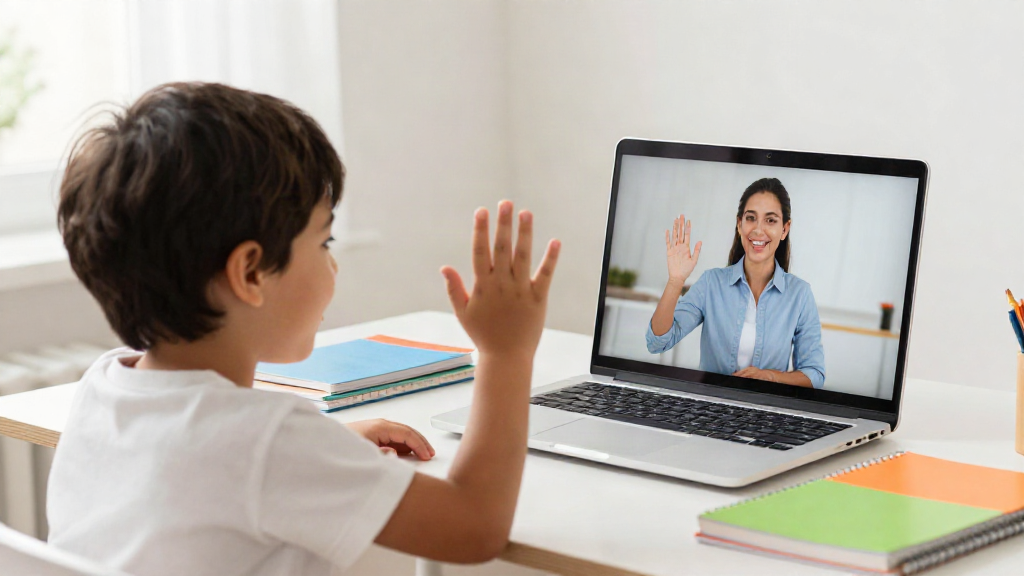
Most parents who land here have the same story. You downloaded a Spanish app for your kid, they loved the little owl and the streak counter for two weeks, and then... nothing. The streak died, the tablet went back to Minecraft, and your child still can't say más than hola. So now you're wondering: are Spanish apps for kids a waste of time, or did we just pick the wrong one?
Here's the honest answer. Apps are not the villain, and live classes are not magic. But they are built to do very different jobs - and once you see which job your child actually needs, the choice gets a lot clearer.
Why "It Didn't Stick" Is the Real Story
When parents tell us an app "didn't stick," they usually mean one of three things. Their child memorized words but never used them out loud. The novelty wore off because nobody was waiting for them. Or the app moved at a fixed pace, so a frustrated kid just stopped opening it.
That's not a motivation problem. It's a design problem. A well-made app is excellent at teaching recognition - tapping the right picture, matching a word to a sound. What it can't easily do is create the one thing that makes language stick: a real conversation with a real person who responds to your child.
The Apps vs. Live Classes Breakdown
Let's compare them on the outcomes parents actually care about.
Real conversation
Apps train your child to respond to a screen. Live classes train them to respond to a person. A native teacher can ask a follow-up question, wait through an awkward pause, and nudge a shy learner into a full sentence. That back-and-forth is where speaking confidence is built - and it's the hardest thing to replicate with software.
Pronunciation
Recording yourself and getting a green checkmark is helpful feedback. Hearing a native speaker model a rolled r in real time, then gently correcting your child mid-sentence, is a different level of learning. Authentic pronunciation comes from imitation and correction, not just repetition.
Accountability and consistency
This is where apps quietly lose. A streak is easy to abandon when no one notices. Knowing Teacher Viviana will ask "¿Cómo estás?" on Tuesday creates a small, healthy kind of accountability - the same reason kids try harder in a class than alone with a workbook.
Cultural connection
Apps teach vocabulary. Live native-led classes teach language in context - songs, festivals, food, and the small cultural moments that make Spanish feel like something your child belongs to, not just a subject to pass.
Pace and personalization
A fixed app level can bore a fast learner and overwhelm a cautious one. A teacher can slow down, speed up, or switch tactics in the moment, which keeps the lesson inside your child's sweet spot.
What Apps Are Actually Good At
We're not throwing apps under the bus. They're genuinely useful for daily vocabulary practice, keeping Spanish in front of your child between lessons, and low-pressure repetition that would feel boring in a group class. Think of an app as the practice gym, not the coach.
Why Live Native-Teacher Classes Win the Conversation Test
If your goal is "I want my child to actually speak Spanish," live instruction is the piece apps can't replace. At Spanish the Fun Way Academy, every class is led by a certified native Spanish-speaking teacher - our Edutrainers - who blend games, music, and real conversation so kids learn the way they naturally learn: by playing.
Our S2S (Shy-to-Speaking) approach is built for exactly the kid who clams up on camera. Gentle guided prompts and games help shy learners build up to full sentences, step by step. Classes follow a CEFR-aligned curriculum (A1-C2) in neutral "Global Spanish" that's understood everywhere, and they're designed to be welcoming for neurodivergent learners too.
Trusted by 7,000+ families across 40+ countries, with small groups, private 1:1 lessons, and full courses for kids ages 3-18, live classes give your child the two things an app can't: a person who responds, and a weekly rhythm that keeps Spanish alive.
The Best Answer: Use Both Together
You don't have to choose. The families who see the fastest progress often pair the two. Their child uses an app for quick daily vocabulary practice, then brings those words into a live class where a native teacher turns them into real conversation. The app supplies the repetition; the class supplies the reason to speak.
A Quick Checklist for Choosing
-
Is a real, responsive person part of the weekly routine?
-
Will your child speak out loud in full sentences, not just tap answers?
-
Is the teacher a native speaker who can model real pronunciation?
-
Does the format fit your after-school schedule and your child's energy?
-
Is there flexibility - group, 1:1, and bonus practice between lessons?
If you can check those boxes, you've moved past the app-only stage and into the part of learning where kids actually start talking.
The Bottom Line
Spanish apps for kids are a great warm-up and a handy practice tool. But if the goal is conversation - a child who can chat with abuela, order in a restaurant, or make a friend in Spanish - live, native-led classes are what get them there. Use the app to practice. Use the class to speak.
Want to see it in action? Tell us your child's age and Spanish level, and we'll help you find the perfect class. Nos vemos en clase - see you in class!